Construction dust is expected during remodeling.
Lead-contaminated construction dust is different.
When renovation, demolition, painting, window replacement, sanding, cutting, drilling, or other construction activity disturbs lead-based paint, microscopic lead-contaminated dust can spread far beyond the surface being worked on.
And one of the most dangerous misconceptions about lead is this:
The hazard does not necessarily disappear when construction is finished.
If lead dust is not properly controlled and cleaned, contamination can remain in the property after the contractor, tools, dumpsters, and construction debris are gone.
Why Older Homes Require Special Attention
Lead-based paint was widely used in American housing before residential use was banned in 1978.
EPA reports that approximately three-quarters of U.S. homes built before 1978 still contain some lead-based paint.
Lead-based paint that is intact and properly maintained may not create the same risk as paint being actively disturbed.
Construction changes that equation.
Activities such as:
- Sanding
- Scraping
- Cutting
- Drilling
- Demolition
- Window replacement
- Door replacement
- Removing trim
- Opening walls
- Removing painted plaster or drywall
- Replacing siding
- Disturbing painted flooring or stairs
can generate lead-containing chips and extremely fine dust.
EPA warns that renovation, repair, and painting projects in pre-1978 properties can create dangerous lead dust when lead-based paint is disturbed.
Lead Dust Does Not Stay Where It Was Created
Imagine a contractor sanding a painted surface in one room without proper containment.
The visible work may be happening in a ten-foot area.
The dust does not necessarily remain there.
Dust can travel on:
- Shoes
- Clothing
- Tools
- Extension cords
- Equipment
- Building materials
- Workers' hands
- Debris carts
- Air movement
- Foot traffic
Workers can also unintentionally carry lead contamination away from the jobsite.
EPA warns that construction workers exposed to lead dust can carry contamination on their skin, hair, clothing, shoes, or equipment, potentially bringing it into vehicles and homes.
This is known as take-home exposure, and it is one reason environmental controls matter beyond the immediate worker performing the construction.
A House Can Look Clean and Still Contain Lead Dust
One of the most important characteristics of lead contamination is that you cannot determine whether a surface is safe simply by looking at it.
A room may have:
- New drywall
- Fresh paint
- New flooring
- New cabinets
- New windows
- New trim
and still have lead-contaminated dust remaining on surfaces if the construction work was not properly controlled and cleaned.
Lead dust may settle on:
- Floors
- Window sills
- Window troughs
- Baseboards
- Shelving
- Furniture
- Appliances
- Children's toys
- HVAC-adjacent surfaces
- Stairways
- Entryways
- Other horizontal surfaces
EPA notes that settled lead dust may re-enter the air when people walk through contaminated areas or when improper cleaning methods such as ordinary sweeping disturb it.
That means the period after construction deserves just as much attention as the demolition itself.
Children Face an Especially Serious Risk
Lead exposure can affect adults, but young children are particularly vulnerable.
Children spend significant time on floors and frequently put their hands, toys, and other objects into their mouths.
If lead dust has settled onto a floor, windowsill, toy, or other surface, it can be transferred from the surface to a child's hands and then swallowed.
This is why a small amount of poorly controlled construction dust can become a significant household exposure issue.
Minnesota Department of Health warns that lead paint chips, dust, and debris produced during renovation can pose health hazards to both children and adults.
Construction Can Turn an Existing Material Into a New Exposure Pathway
Lead-based paint may have remained undisturbed behind layers of paint for decades.
Then renovation begins.
A contractor sands it.
A saw cuts through it.
A window is removed.
A wall is demolished.
Trim is torn out.
Suddenly, lead that had been bound within a painted building component has been converted into dust and debris.
This is why environmental planning should occur before construction starts — not after dust is already throughout the building.
Containment Is More Than Hanging a Piece of Plastic
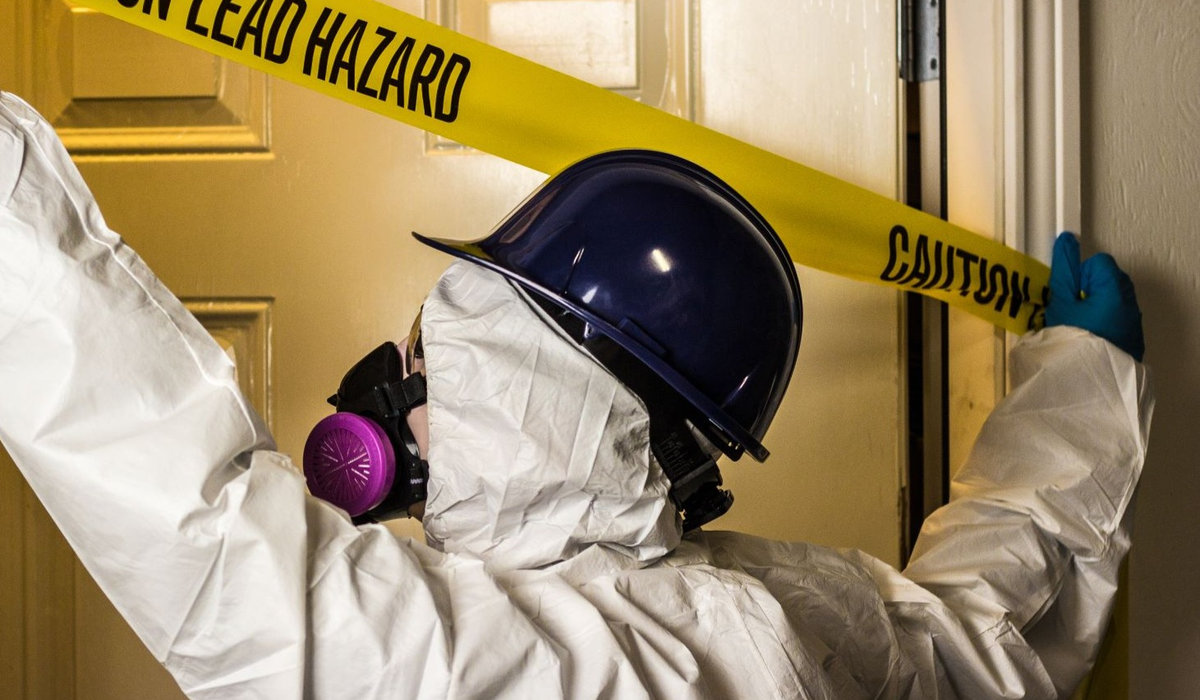
Effective lead-safe work practices are designed to prevent contaminated dust and debris from migrating outside the work area.
EPA's Renovation, Repair and Painting Rule requires specific practices when regulated renovation activities disturb lead-based paint. These practices include containing the work area, minimizing dust generation, restricting certain high-dust work methods, thoroughly cleaning the work area, and performing required cleaning verification procedures.
Depending on the type of project, controls may include:
- Establishing a defined work area
- Protecting floors and nearby surfaces
- Restricting access
- Containing dust and debris
- Using HEPA-filtered equipment
- Controlling high-dust activities
- Properly handling debris
- HEPA vacuuming
- Wet cleaning
- Preventing workers from tracking contamination outside the work area
- Completing required cleaning verification or clearance procedures
The exact requirements depend on the building, the work being performed, and whether the project involves renovation, lead hazard reduction, or regulated lead abatement.
Ordinary Shop Vacuums Are Not the Same as HEPA Controls
Another common mistake is assuming that ordinary construction cleanup is adequate for lead dust.
It may not be.
Dry sweeping can move fine dust around rather than adequately removing contamination.
Likewise, ordinary vacuums are not substitutes for HEPA-filtered equipment when HEPA controls are required.
EPA's lead-safe work practices specifically incorporate HEPA equipment and thorough cleaning techniques to minimize exposure to lead-contaminated dust.
What Happens When Lead Is Not Properly Controlled?
Improper lead handling can turn a limited construction area into a much larger environmental cleanup.
For example, dust originating from one room can potentially be tracked into:
- Hallways
- Stairways
- Adjacent bedrooms
- Kitchens
- Living areas
- Common areas
- Vehicles
- Other residences
Once contamination spreads, determining the affected area may require additional investigation and sampling.
Cleanup can also become more extensive because surfaces and belongings that were not part of the original construction project may now require evaluation.
Preventing contamination is generally far better than trying to determine where it traveled afterward.
Post-Construction Verification Matters
Finishing the physical construction does not automatically prove that the environmental hazard has been addressed.
Depending on the type and regulatory classification of the project, post-work procedures may include required cleaning verification and, in some situations, environmental sampling or clearance testing.
Dust wipe sampling can be used in appropriate circumstances to measure lead in settled dust on specific surfaces.
This type of documentation can help determine whether lead contamination remains after work has been completed.
The important point is simple:
A visual inspection alone cannot tell you how much lead is present in settled dust.
Lead-Safe Construction Protects the Next Contractor Too
Environmental controls do not only protect the current occupants.
They can protect everyone who enters the building afterward.
That may include:
- Painters
- Flooring contractors
- Electricians
- Plumbers
- HVAC technicians
- Cleaning crews
- Reconstruction contractors
- Property managers
- Inspectors
- Future tenants or homeowners
When one contractor fails to properly control a hazardous material, the next person entering the work area may unknowingly encounter the contamination.
Minnesota Property Owners Should Ask Questions Before Renovation Begins
If you own or manage an older property, ask your contractor:
When was the building constructed?
Will painted surfaces be disturbed?
Has the possibility of lead-based paint been evaluated?
Is the contractor properly certified for regulated lead renovation work?
How will the work area be contained?
How will dust be prevented from spreading?
What type of vacuum and cleaning equipment will be used?
How will workers enter and exit the work area without tracking contamination?
How will construction debris be handled?
How will the area be evaluated after cleaning?
Federal law requires firms performing covered renovation work for compensation in pre-1978 housing and child-occupied facilities to comply with EPA's Renovation, Repair and Painting requirements, including certification and lead-safe work practices.
The Aftermath of Improper Lead Work Can Last Longer Than the Construction
Construction may take days or weeks.
Lead contamination left behind can remain until it is properly identified and removed.
That is why environmental safety cannot simply be treated as another line item at the end of a construction project.
It needs to be integrated into the project from the beginning.
Identify the hazard.
Control the work area.
Prevent contamination from spreading.
Clean using appropriate methods.
Verify the condition of the property when required.
Atlas Construction & Environmental: Protecting the Property Beyond the Construction Zone
At Atlas Construction & Environmental, we understand that environmental hazards do not always stop at the edge of a construction area.
Lead-containing dust can be created during demolition and renovation, transported outside the immediate work zone, and left behind after construction if proper procedures are not followed.
Atlas Construction & Environmental works with homeowners, property managers, contractors, insurance professionals, and other project stakeholders to address lead and other environmental hazards encountered during renovation, demolition, restoration, and property damage projects.
If you are planning construction in an older property — or you are concerned that previous construction may have spread lead-contaminated dust — addressing the environmental condition early can help prevent a much larger problem later.
The job is not truly finished if hazardous dust was left behind.
Contact Atlas Construction & Environmental to discuss lead-related environmental concerns before, during, or after a construction project.