When a home or building experiences a fire, burst pipe, flood, roof leak, or other major water loss, the first concern is understandably stopping the damage and beginning cleanup.
But in older properties, another hazard may be hidden inside the building materials: asbestos.
Asbestos was used in thousands of construction materials because of its durability, heat resistance, and insulating properties. According to the Minnesota Department of Health, asbestos-containing materials have been found in products including flooring, wall systems, insulation, ceiling materials, siding, roofing, pipe insulation, heating systems, joint compound, and other building components.
The presence of asbestos does not automatically mean a building is unsafe. Asbestos-containing material that is intact and left undisturbed may present little risk.
The situation changes when that material becomes damaged, deteriorated, cut, broken, demolished, sanded, scraped, or otherwise disturbed.
Why Fire Damage Can Create an Asbestos Hazard
Asbestos itself was widely used because of its resistance to heat. That does not mean asbestos-containing building materials are safe after a fire.
A structure fire can severely damage the materials surrounding or containing asbestos. Ceilings can collapse. Flooring can break apart. Wall systems can be opened. Pipe insulation can be damaged. Roofing and siding can fracture.
Firefighting operations may also introduce thousands of gallons of water into a structure, leaving already damaged materials saturated, unstable, and subject to additional demolition.
Once damaged asbestos-containing material is broken apart or disturbed during cleanup, microscopic asbestos fibers may become airborne.
The Minnesota Department of Health explains that asbestos fibers are extremely small and can travel deep into the lungs when inhaled. Exposure is associated with serious diseases including lung cancer, mesothelioma, and asbestosis.
That is why fire-damaged properties should be evaluated for hazardous building materials before uncontrolled demolition or debris removal begins whenever conditions allow.
Water Damage Can Create the Same Problem
Water damage can appear less destructive than a fire, but the restoration process itself can disturb materials that were previously intact.
Consider what normally happens after a significant water loss:
Drywall may be cut and removed.
Flooring may be pulled up.
Ceilings may be opened.
Insulation may be removed.
Cabinetry may be detached.
Pipe chases and mechanical systems may be exposed.
Flooring adhesives and underlying layers may become accessible.
Wet materials may be scraped, drilled, sawed, or demolished to reach affected areas.
If one of those materials contains asbestos, ordinary water-damage demolition can suddenly become asbestos-related work.
MDH specifically warns that flood-damaged asbestos-containing material may need to be repaired, enclosed, encapsulated, or removed and strongly recommends that asbestos abatement work be performed by a Minnesota-licensed asbestos contractor.
The Hidden-Layer Problem
One of the most important things property owners should understand is that asbestos may not be visible from the surface.
A water-damaged floor, for example, may contain several layers:
- New flooring
- Older sheet flooring
- Floor tile
- Adhesive or mastic
- Underlayment
- Additional concealed flooring beneath it
Walls and ceilings can present similar problems. A newer painted surface may conceal older plaster, joint compound, texture, insulation, or other materials.
This is one reason a visual inspection alone cannot reliably determine whether a material contains asbestos.
When suspect material will be disturbed, proper inspection and laboratory analysis may be necessary before work proceeds.
Why “Just Start the Demo” Can Be a Serious Mistake
After a fire or water loss, there is often pressure to move quickly.
The property owner wants the building dried.
The insurance company wants documentation.
The restoration contractor wants to remove damaged material.
Reconstruction needs to begin.
But beginning demolition before identifying suspect asbestos-containing materials can create a much larger problem.
Instead of having asbestos contained within one building component, improper demolition can spread contaminated dust and debris throughout the work area and potentially into adjoining spaces.
OSHA's construction asbestos standard applies to activities including demolition, renovation, repair, removal, asbestos emergency cleanup, and related handling of asbestos-containing materials. OSHA also prohibits practices such as dry sweeping asbestos-containing dust and debris.
The safest sequence is often:
Assess → Identify → Sample when necessary → Plan → Control the hazard → Then perform demolition or reconstruction.
Asbestos Can Affect More Than the Original Damaged Area
A common misconception is that asbestos is only a concern exactly where the damaged material is located.
The actual concern is whether fibers or contaminated debris can migrate outside the immediate work area.
That can occur through uncontrolled demolition, foot traffic, equipment, debris movement, air movement, or improper cleaning.
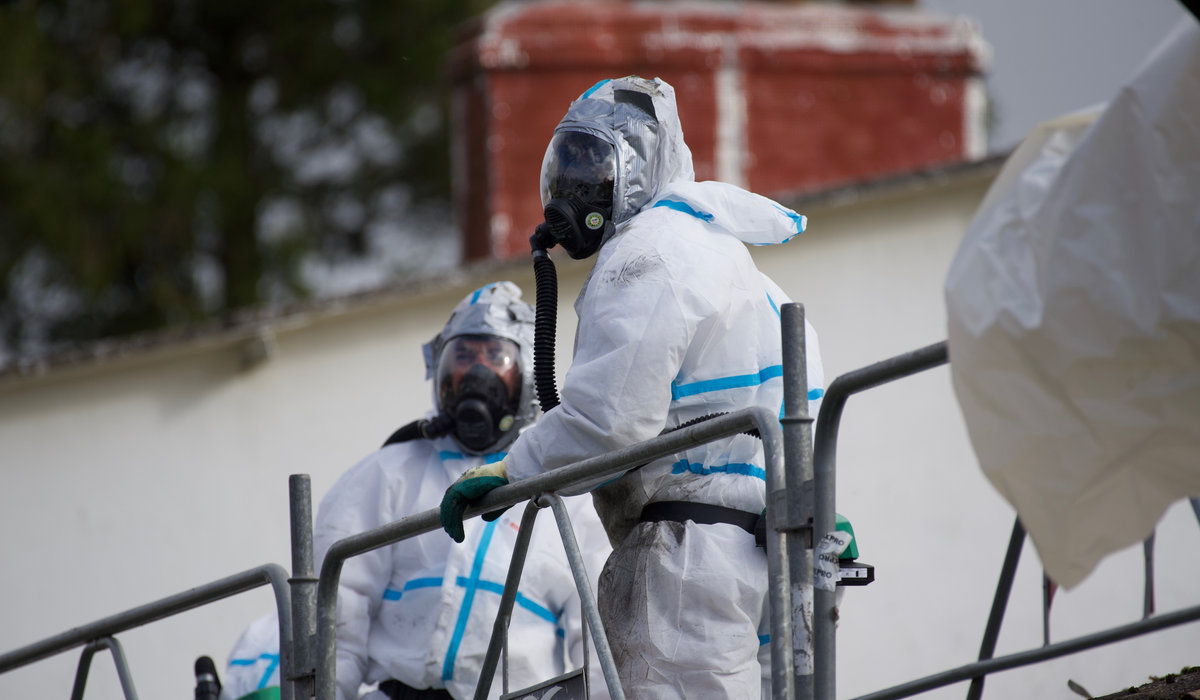
Professional asbestos work may therefore involve measures such as regulated work areas, containment, HEPA-filtered equipment, wet methods, controlled removal procedures, decontamination, appropriate waste handling, and air monitoring depending upon the project and regulatory requirements.
These controls are designed to prevent the asbestos problem from becoming larger than the original damage.
What Property Owners Should Do After a Fire or Major Water Loss
Before allowing extensive demolition in an older home or building, ask several important questions:
Has the damaged area been evaluated for suspect asbestos-containing materials?
Will any flooring, ceilings, insulation, plaster, joint compound, pipe insulation, siding, roofing, or other potentially asbestos-containing material be disturbed?
Has appropriate sampling been completed when required?
If asbestos is present, is the contractor appropriately licensed for the work being performed?
Is there a plan to prevent contamination from spreading into unaffected areas?
How will asbestos-containing waste be handled and disposed of?
What documentation will be provided when the work is complete?
These questions are especially important before demolition begins.
Do Not Assume a Newer-Looking Home Is Asbestos-Free
Many people associate asbestos only with extremely old buildings.
That can be misleading.
Older materials may remain beneath renovations performed decades later. New flooring may have been installed over old asbestos-containing flooring. New walls may cover older materials. Mechanical systems may contain original components.
MDH notes that asbestos was used in thousands of construction products and recommends inspection or sampling when the identity of suspect material cannot otherwise be determined.
Fire and Water Restoration Should Include Hazard Planning
Stopping water intrusion and stabilizing a building are urgent.
But urgency should not mean overlooking environmental hazards.
EPA guidance for damaged buildings specifically warns that building materials disturbed during disaster cleanup and renovation may contain hazardous substances such as asbestos and lead. EPA recommends that suspected asbestos-containing materials not be disturbed until the hazard can be appropriately addressed.
Identifying the hazard early can protect:
- Property owners
- Occupants
- Children
- Restoration workers
- Construction contractors
- Adjacent areas of the property
- Future occupants
It can also reduce the risk of turning a controlled environmental condition into widespread contamination.
Atlas Construction & Environmental: Environmental Hazards Should Be Addressed Before Reconstruction
At Atlas Construction & Environmental, we understand that fire and water losses involve more than removing visibly damaged material.
Older buildings may contain environmental hazards that need to be evaluated before demolition and reconstruction move forward.
Atlas Construction & Environmental provides environmental and asbestos-related services for residential, commercial, renovation, restoration, and insurance-related projects throughout Minnesota.
When suspect materials are discovered after fire or water damage, identifying the condition early allows the restoration and reconstruction process to move forward with a better understanding of the actual scope of work.
Before you disturb it, know what you are dealing with.
If your home or property has experienced fire, flooding, a plumbing loss, or other significant water damage and asbestos-containing materials may be involved, contact Atlas Construction & Environmental to discuss the next steps.